The Art of Finishing: Guest Post

You have treasures hidden within you – extraordinary treasures… And bringing those treasures to light takes work and faith and focus and courage and hours of devotion, and the clock is ticking. – Elizabeth Gilbert, Big Magic

I’m so pleased to be up on The Gift of Writing with my latest guest post, The Art of Finishing: Manifest Your Writing Goals.

I’ve mentioned my struggle with my novel-in-progress more than a few times here on the blog, and it’s a challenge I suspect many can relate to whether or not you write. In my post I offer three simple ways to move past your own resistance, which can be defined as any thing, thought, or person that keeps you from achieving your goals.

Writing the essay helped clarify my own plan and I hope it helps others who find themselves stuck or sidetracked in any aspect of life, artistic or otherwise.

Please click here if you’re interested in reading the article. As always I’m honored by your support in whatever form it arrives!

P.S. If you haven’t already, consider signing up for my newsletter. You don’t want to miss my  upcoming Valentine’s Day inspired theme – Falling in Love with Podcasts: The Literary Edition!

The Small Backs of Children: Book Review

One word has exploded a world of new-to-me authors and books: podcasts.

That’s how I found out about Lidia Yuknavitch, author of two short story collections, the ground-quaking body-centric memoir, The Chronology of Water, a novel about Freud’s famous first patient, Dora: A Headcase, and her latest fiction, a heart shattering and language loving novel, The Small Backs of Children.

I don’t often review books on this blog (hey, maybe I will) but after reading my first Lidia I felt a shift, the seismic kind. So often, reading removes me from my body. You probably know what I mean, when immersed in a riveting story, you lose your physical self and float away in a time-space oblivion. But this time the opposite occurred. Reading The Small Backs of Children I was as fully aware of my body’s responses to her words as I was to my brain’s.

The book was intense and when I finished I felt shaken and stirred (sorry, but there’s a lot of drinking as well as violence and beauty). Shortly after, I began writing my first short story in two years. I know her influence left an impression on the choices I made in regards to language and the body.

Are you curious yet? My review is below, and shortly, I will be sending out a long-awaited newsletter with an exhaustive – but thrilling (!) podcast round-up. If you’re not a podcast convert yet, you may be by the end. Please consider signing up (CLICK HERE!) for my newsletter if you haven’t already. Believe me when I say you won’t be inundated. Maybe monthly, if the stars and planets align.

Now, finally…

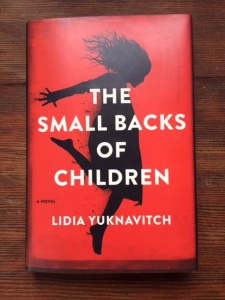
The Small Backs of Children by Lidia Yuknavitch

This is a book about the body. Women and children’s bodies, and the violence inflicted on them during times of war and peace.

The Small Backs cover

Yuknavitch begins in the mind of an unnamed girl, in an unnamed Eastern European country, as she recalls the obliteration of her family home – and entire family – while walking in the snowy woods a year later.

In many ways, the girl is the focal point of the story, the sun which all the other characters orbit. None of these characters have names. They are a band of artists identified only by their work: writer, photographer, painter, poet, playwright, and filmmaker. When the writer of the group falls ill, unable to come back from the oceanic grief of losing her stillborn child, her friends rally to help.

The intersection of the girl and these artists make up the plot, but the idea of “plot” is used loosely as this book defies conventions on every level. Early on, Yuknavitch plays with the translucence of fiction and memoir by including biographical information in the story. The Writer even says, “Every self is a novel in progress. Every novel is a lie that hides the self.”

Is the Writer a thinly veiled Yuknavitch, an echo of her lived experience? Is she playing with us in this passage? How much of the book is based on fact and how much is fiction?

But this wonder is soon set aside. There are more pressing issues at hand. Sweeping philosophical questions with no definitive answers arise, including – how is motherhood defined, can art save lives, and what responsibility does an artist have to her subjects? All this is juxtaposed alongside explicit sequences of torture and sex (sometimes consensually, sometimes not).

Yuknavitch writes with ferocity, as if she’s daring the reader to look away. As she explains in an interview with The Rumpus, the goal of this book isn’t to entertain or comfort; the point is to agitate.

Agitation may be an understatement for some readers. Despite being deeply invested in the book, even I had some moments of discomfort, but I kept reading. Maybe it’s like a highway car accident, how other drivers slow down to look. Once viewed there is no un-seeing the carnage, and that is the point of this book. Yuknavitch wants readers to be changed, and I imagine many will.

One thing that struck me about this book was how acutely aware I was of my own body while reading it. Usually when reading fiction, I lose myself. I become unaware of the passage of time and my own physicality. But instead of disappearing, my body was complicit, cringing and humming along with the characters’ experiences.

This novel is not for the fainthearted. Trigger warnings abound. There is blood, lots of it, but as the narrator says toward the end, “You wish I would stop speaking about all this blood, but I’m afraid it’s the point.”

Yes, it is, because this is a novel about the body, about pain inflicted, but also pleasures amassed. Despite all the horror, Yuknavitch celebrates the resilience and strength of bodies. How sometimes, with luck, the heart will continue to pump despite the scars, despite the weight of grief we all carry.

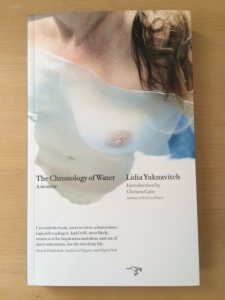
(Highly) Suggested pairing: Yuknavitch’s memoir, The Chronology of Water.

Chronology of Water cover

What books and/or authors have you stumbled upon that have changed your life/rocked your literary world? Please share in comments. I’d love to know.

When The Story Finds You

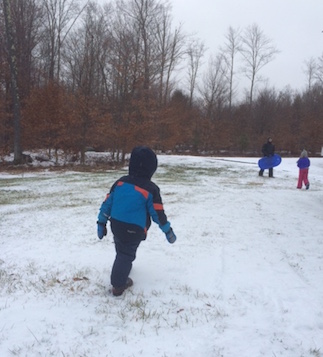
We spent our winter holiday in upstate New York on the edge of the Catskills. To our delight, despite initially mild temperatures, it snowed. Not much, but enough to coat the ground and frost the trees, enough for the smallest snowman and sledding.

snowy play 2At one point, I decided to take a walk. I grabbed a wooden walking stick and headed up the empty gravel road. Away from the shrieks of my children, there was little noise. Just the satisfying crunch of the stick as it punched holes in the snow and the sound of my breath.

I’d forgotten how much I love walking, how fast thoughts rise up, like cream to the surface. After nearly a week indoors with my children – no snow to distract them, but thankfully, cable TV – I was finally alone.

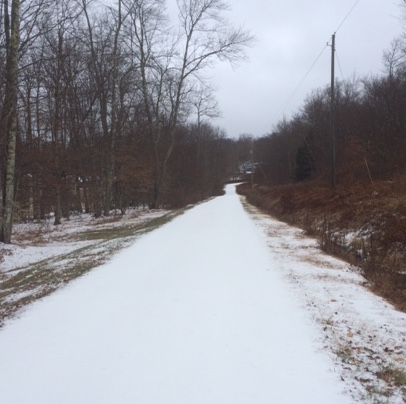
snowy roadMy mind soon landed on a short story I’d been mulling over. A story about a family on the cusp of big change. A story that takes place in the Catskills. A story that happened to me. Since the specifics are hazy, and frankly too boring, I always knew it would be fictional.

With each step the story unwound like yarn in my mind, getting tangled up, unraveling, leading the way. I decided to write it in four sections, in the voice of each family member: mother, father, and their two daughters. I didn’t know yet the mother would be easiest to write, the older daughter the hardest.

I paused by a circle of pine trees and hesitated for a moment before heading into the brambles to explore. It wasn’t far off the road, there was no chance to get lost or hurt, but I hesitated. It’s how I’ve lived much of my life. Cautious, staying on the path, but lately, especially with writing, I’m taking more chances.

Back on the road, I stared at the smooth expanse of white snow. Without thinking, I began to write my mother’s name, as I used to do in sand at the beach, but instead of Mom, I wrote her name, Susan. Then I added these words: You Are Missed.

My mother, and the weight of her absence, is often just a whisper away.

Back in the warmth of the house, after hot chocolate and bedtime madness, I curled up in the chair between the rooms of my children and began my story.

It took me two weeks to complete, right in time for a mid-January contest deadline, which lit my initial fire. The story isn’t finished. I’ll tweak and sculpt more before sending it out to other contests, but the hardest work is done.

I don’t think I’ve ever written a story so quickly, but the truth is, it took longer than two weeks. I’ve had this story growing inside me for months, maybe years. The weekend I spent in the Catskills at age fifteen was the last vacation I ever took with my family. In fifteen more years, she’d be dead.

When you’re a writer, people love to tell you their stories. Oh, have I got a story for you, they say, perhaps expecting you to whip out a pen and take notes. It’s not their fault. Often their stories are fascinating, and could certainly make wonderful fiction or memoir. But in my experience, a writer doesn’t necessarily choose her stories – the stories choose her.

What themes do you return to over and over again? Is there a seed of a story growing inside you? Is it ready to bloom?

I’m so pleased to be part of Writing Bubble’s wonderful link-up. Come by, take a look, and perhaps join in!

What-Im-Writing-linky-badge


Out in the World

“Motherhood is an endless cycle of letting go, a constant reconfiguring of rules and boundaries. You have to be flexible, quick to shift and shed. These are things I struggle with in regular life, and as a mother, even more.”

One of my recent posts, Grief and Gray Days, is now up on Mamalode! I’m so thrilled to be on their site, which is filled with thoughtful and lyrical musings about motherhood.

If you haven’t read the essay yet, please head over to check it out. I love that it’s getting a second life.

white sky day

Thank you as always!

Edible Memories: Laughter

Sometimes I leap first.

When my online writing friend Stacey asked me to consider signing up for a 14-day writing group via the Inky Path, my first instinct was to say no. I barely have enough time to work on my novel, not to mention the grief course I’m creating, let alone the safety skills class I’m organizing – oh, and then there’s that whole mother/wife gig, plus my nemesis, the bottomless laundry basket.

But I couldn’t get it out of my mind. A tell-tale sign. As I kept tabs on the rising enrollment, I felt an itch, a twinge, but couldn’t tell if it was a competitive-fear-of-missing-out or the I-need-to-do-this kind of feeling. Looking back, it was probably a little of both.

One week into the Winter Joy Retreat: Edible Memories, and I’m fully immersed. It’s pretty impossible to keep up with the group’s Facebook posts (over 100 people registered, though not all post daily) but I’m trying to hold fast to my own commitment, one writing prompt each day. This isn’t easy – my kids are young and life is full, but I’m delighted to say that – so far at least – I’m making it happen. I’ve always felt like my memory is kind of bad, but each prompt seems to unlock one, two, more scenes in my mind, and I’m taking notes like mad, for both the prompts and the possibility of memoir.

I’d like to share with you my most recent prompt. The theme was Laughter (with an emphasis always on food) yet somehow I managed to turn it around to sadness (just like the character on Inside Out!). But that’s how I’ve always been. Drawn to the bittersweet, both in food and life.

Winter Joy Retreat: Edible Memories

Laughter

Thanksgiving has long been my favorite holiday. As a kid we took turns having it at our house, but after my mother’s MS diagnosis, we always hosted. My uncle, king of turkey and CEO of stuffing, would come to our house in the morning with bags of supplies, plus a bonus bag filled with appetizers from Zabar’s: salami, cheeses, crackers, olives, lox spread, and bagels.

He’d pop the prepared turkey in the oven and it would cook all day while we snacked and cracked jokes. When it came time to eat, my father would hoist my mother into her scooter and drive her into the dining room after she could no longer do so herself. We’d eat and laugh, and when all us kids were of legal age, or close enough, drink some wine.

My memories of Thanksgiving were almost always punctuated by laughter. Especially in the earlier years, before my mother’s pain became unbearable.

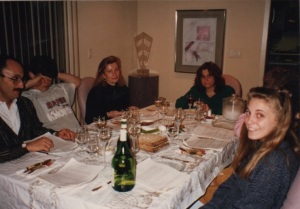
This was from Passover, but same crew, without the matzoh.

This was from Passover, but the same characters.

The house was always filled with warmth and smelled of roasting turkey and marshmallow topped yams. My uncle would always cook the main meal. My cousin Pia would always bring dessert. My mom always insisted on making, or instructing me how to make, her favorite side dish, green bean casserole. And I always had to have a slice (or two, three) of pumpkin pie topped with Cool Whip.

Maybe that’s what I loved most about Thanksgiving – the “always’s,” the traditions we had curated and nurtured over the years. We were Jewish and didn’t have the show stopper of Christmas to look forward to, so I banked all my love and hope on Thanksgiving.

Things weren’t always so rosy, of course. There were fights and tantrums, angry words and slammed doors, more so as the years edged on to darker times, but mostly I remember the laughter.

The time when my cousin Ari and I stumbled upon a very strange AOL chat room in the late 90s. Don’t ask me why or how this happened, but let’s just say we were beside ourselves with hilarity when we ended up in a conversation about fruit fetishes, among other things.

Then there was the time my grandmother got drunk. Alcohol was pretty minimal at our house, even on the holidays, but somehow she had gotten her glass refilled one time too many and ended up divulging a bizarre genetic glitch afflicting several relatives. I’m almost positive somebody spit out their mashed potatoes, or at least choked on their soda.

Laughter filled the rooms and rang through the kitchen and seeped into the walls, so that when it ended, I could feel its echo.

My mother’s last Thanksgiving was hard. There was little laughter. The mood was dour, tense. My husband and I thought it might be helpful to order dinner from Fresh Direct and bring it from Brooklyn, rather than have my uncle cook in the house since my mom was feeling worse. The king of turkey did not take kindly to what felt like a personal affront. He sulked in the kitchen eating his “take-out” meal while the rest of us sat in the family room with my mother, who was too uncomfortable to transfer from her reclining chair.

I remember feeling desperate for some levity, anything to lighten the mood, to coax my uncle out of the kitchen, to ease the tension with my brother, to make my mother laugh. But nothing worked. We sat on the couch for what felt like an uncomfortable amount of time, and I rolled my eyes at my cousin Pia when our brothers began talking of sports, not with any vigor or enthusiasm, but dully, as if they had nothing else to say. Perhaps because they didn’t.

When everyone finally left, I felt a heavy weight settle around my shoulders as I dumped the leftovers in the trash. Looking back, I wonder if my sadness was actually a sign, a warning. It left me uncomfortable. A sense of foreboding prickled up my spine.

I thought, next year will be better. Next year has to be better.

But it wasn’t, because my mother was dead.


What-Im-Writing-linky-badge

Thank you to Maddy over at Writing Bubble for hosting her What I’m Writing link-up. Check it out for more wonderful words.

Own Your Story

I never thought I’d consider writing a memoir.

Fiction is my genre. It always has been, ever since I was a little girl crafting “books” out of construction paper and crayons. When I declared myself a writer at some point in elementary school, I wanted to write stories. I wanted to make stuff up.

There’s a safety in fiction that doesn’t exist for memoir.

Maybe that’s why I kept myself firmly planted there for so long. I never had to be held accountable. I could always say, it’s just a story, if anyone bothered me about autobiographical details.

Of course every writer, no matter the genre, weaves in elements of themselves, their lives, in their work. If not things that happened to them directly, then things they observed, sensed, or felt. Creativity doesn’t happen in a vacuum. But fiction writers can hide behind a cloak of invisibility – or at least, pretend to do so – while memoirists are stark naked.

Over the last couple years, I’ve been taking some different kinds of chances. I wrote about witnessing my mother’s death and the birth of my first child, about postpartum depression and my daughter’s celiac diagnosis. Stories that belong to me, but also, in a way, to my family.

The part of me that values privacy – and secrets – wanted to muffle this new tendency. But something shifted inside me, a curiosity began to unfold.

Recently, a writer friend left a comment on my blog post that flung the door open wide open (thank you Julie Gardner).

“You have a memoir in there.”

Her words stopped me in my tracks. They sunk in and took root, even when I tried to brush them away.

They were part of what inspired my recent guest post on The Gift of Writing.

Own Your Story: Overcoming Fear About Writing Memoir is about my journey, which is still in progress, but also contains universal truths that I discovered in my research about common themes that hold people back from telling their stories.

Please take a look if you’re interested in the topic. Thank you as always for reading my words, here and beyond.


Mothering Through the Darkness: Anthology of the Postpartum Experience

MOTHERINGTHRUDARK

“My shadow’s the only one that walks beside me. My shallow heart’s the only thing that’s beating. Sometimes I wish someone out there will find me. Til then I walk alone.”  
– I Walk Alone by Green Day

I felt so lonely as a new mother. Isolated, ashamed, angry, and ungrateful. None of which was appropriate since I had gotten exactly what I wanted – a healthy baby girl.

Looking back, it was shame that silenced me. How dare I be miserable when I was holding what I wanted in my arms? So I swallowed it all, and it ate me up.

I loved my baby. Deeply. During moments of peace, when she was sleeping and I wasn’t crying with exhaustion or despair, I’d stare at her beautiful face and trace her features with my eyes, wanting to memorize every curve, every angle. I relished the shape of her sweet bow lips, the delicate slope of her nose, the way her chin met her throat, the way that throat would undulate with milk, even in her dreams.

I loved my daughter. But I didn’t love myself. Many days I was full of self-loathing for failing at motherhood. For not loving it enough. For not feeling grateful enough. For not excelling at it, acing it, as I had many things in life.

All around me, other women seemed to have it together in ways I did not. As the months went by, and years, this grew more apparent and deepened my shame.

I never sought help and I was never diagnosed with postpartum depression. I answered the questions the midwife asked at my check-up and came out “clear.” But my perceptions of PPD were wrong. Just because I didn’t feel compelled to injure my daughter or myself didn’t mean I wasn’t hurting deeply.

What I needed was the voices and compassion of other women, other mothers, reassuring me I wasn’t alone. I needed the kind of help my father and husband couldn’t offer me, though they tried.

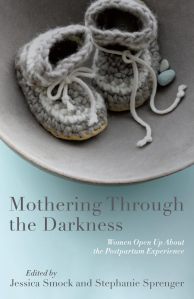
That is why this anthology, Mothering Through the Darkness, edited by Jessica Smock and Stephanie Sprenger of The HerStories Project is such an important book. It would’ve been a lifeline for me.

In a marketplace where there is a glut of books about prenatal and infant care, where are the books about mothers? Where are the books about PPD in all its nuances and variations?

Now there are thirty-five stories, including my own, “Afterbirth.” Writing it helped release years of pent up pain and shame. I cried as I typed, the words pouring forth, as if they had been waiting for a way out.

When the beautiful book finally arrived, I was thrilled, but a little hesitant to read it. Would I be triggered by my co-contributors’ painful stories?

To my surprise, the answer is no. If anything, I am buoyed by our similarities, by the facets of my story that I recognize in theirs. The commiseration that I longed for seven years ago has been gifted to me now.

If you know of a woman in the maelstrom of new motherhood, or recovering from it, please consider letting her know about this book. Or perhaps, pick it up yourself.

No one should walk alone.

Magical Thinking

A book arrived at my home the other day and I greeted it with much anticipation. The cover looked like candy, but I knew what was waiting inside was even better.

big magic

Elizabeth Gilbert chose the perfect title for her book about creativity. I devoured it within forty-eight hours, maybe less. It’s the kind of book you can literally open to any page and find a glittering gem of inspiration, a quote to hang on your wall, or keep close to your heart. She encourages curiosity, discipline, persistence, and play, among other things.

Persistence is key for me right now, and more specifically, persistence with the possibility of no pay-off. Gilbert nails all my fears and anxieties with this quote:

There is no guarantee of success in creative realms. Not for you, not for me, not for anyone. Not now, not ever.

Will you put forth your work anyhow?

The answer, simply, is yes.

I wrote about how I arrived at this conclusion on The Gift of Writing in an essay called, Magical Thinking: Creating Despite the Odds. Please visit me there if the topic resonates.

I’d love to hear what you think about persistence, and what passions you may be following with no guarantee of commercial success, and what keeps you motivated.

Sharing Our Stories

The final installment of my series, Unpacking Your Creative Life, is up on The Gift of Writing. It was my favorite one to write, focusing on the importance of connecting with other writers and sharing your work.

gift of writing

Writing is crucial to success, of course, but if we don’t have company along the way, we are more likely to walk away.

“It is deadly to be without a confidante, without a guide, without even a tiny cheering section.”

Women Who Run With the Wolves by Clarissa Pinkola Estés

I am so grateful for the community of writers I’ve met online, here and beyond, some who I’ve never met, but feel as dear to my heart as those I’ve known for decades.

Yes, it is vulnerable to put your work out there for others to read (and in this day and age, instantly respond), but that’s why having supportive friends is crucial. They will be there to lift you up when the world pushes you down. They will remind you of what’s important – your story, your truth – and to ignore the white noise of those who don’t understand or enjoy stirring up trouble.

In the spirit of sharing, and most certainly vulnerability, here I am at the 2015 Listen To Your Mother Lehigh Valley show.

Motherhood is Obliterating

Why didn’t anyone tell me this? Is it too much of a buzz kill to mention that possibility in childbirth class?

I’m pretty sure I would’ve benefited from a head’s up.

I was, utterly, unprepared for motherhood.

But that’s pretty much all of us, isn’t it? No matter how many classes we take on birthing a baby, or that useless one about infant care when they teach you how to diaper a doll, we’re all air dropped into a foreign country when it comes to new motherhood.

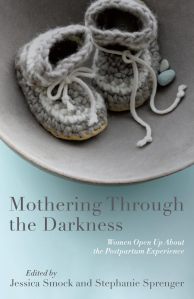
This November, an essay I wrote about my post partum experience will be published in an anthology aptly titled, Mothering Through the Darkness (She Writes Press, created by the HerStories Project). It’s now available for preorder.
MOTHERINGTHRUDARK (1)

For months I hesitated to write my story, let alone submit it, because I didn’t know if it “counted.” Sure, I had a hard time as a new mom, but I hadn’t been diagnosed with postpartum depression. I hadn’t sought help.

Looking back, it’s clear I needed it. I wonder if I had read some of the essays in this collection, if I would’ve reached out instead of holing up. I don’t know. But I do know that I’m proud to be part of an anthology that broadens the spectrum of postpartum distress.

When I was pregnant I used to watch this ridiculous baby show on TLC called, “Bringing Home Baby.” There was something comforting about watching the new parents return home psyched but frazzled. The cameras followed them as they basically lost their minds.

But they always ended the show the same way, about six or eight weeks later, with everyone looking and sounding like they had gotten their act together. Every now and then I’d catch a glimmer in the mother’s eyes, a primal flash of fear, but then they’d cut to the cute gurgling baby batting at a mobile in her crib or sleeping in a bassinet. All was well. Show over.

But life doesn’t work like a TLC show (thank goodness, really TLC, you have gone downhill). It doesn’t wrap up neatly as the credits roll and the parents take their sweetly reclining baby on a stroll around the block.

Mine certainly didn’t, and I suspect, most don’t.
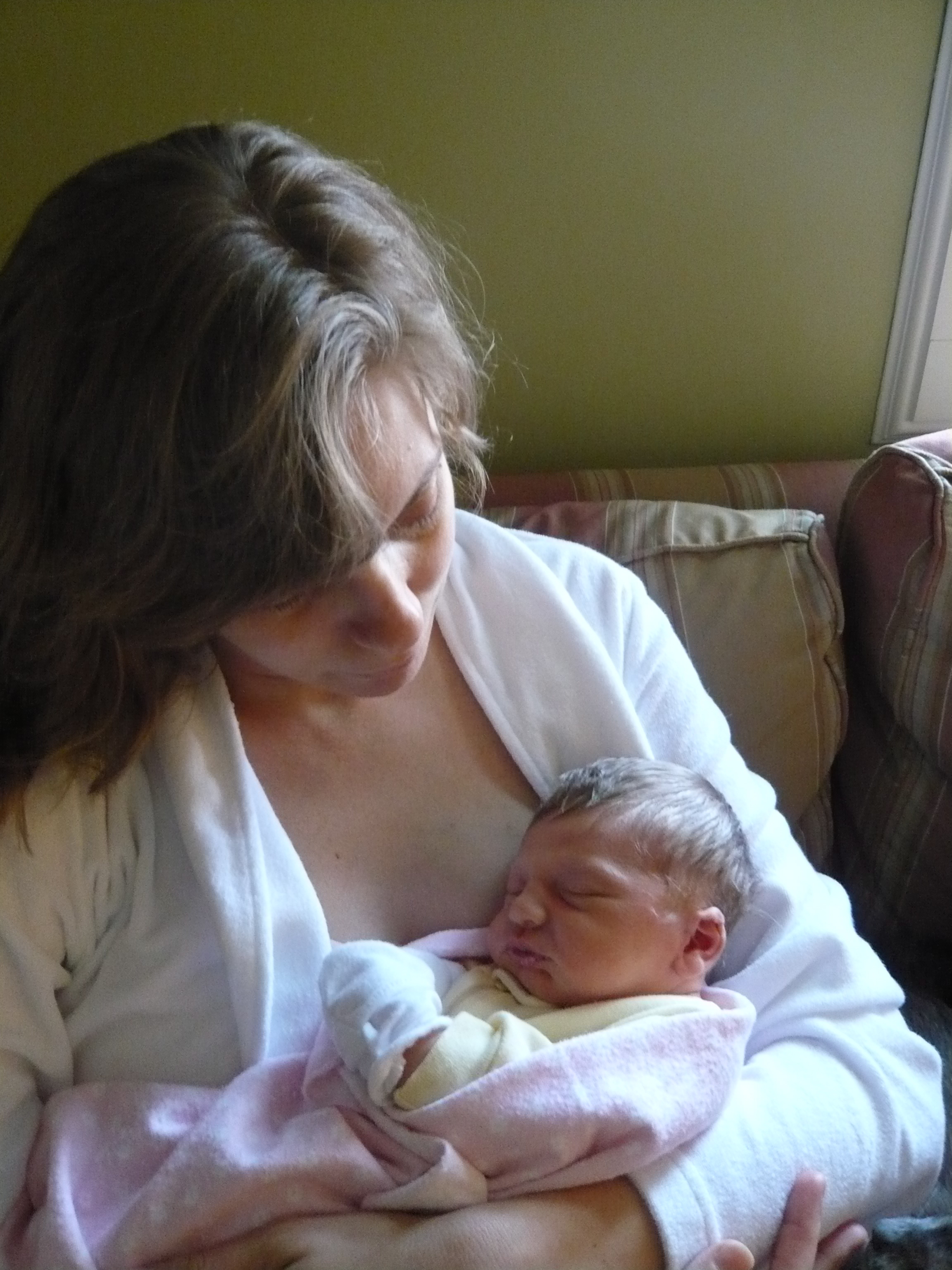
The early days with my baby girl.

The early days with my baby girl.

I still have no idea if I had postpartum depression or postpartum anxiety – an ailment I didn’t even know existed back then. But I do know that new motherhood kicked my ass. Hard.

Do you want to know what I wish I had known? (Hint: It has nothing to do with breastfeeding, vaccinating, sleep training, or any other hot topic parenting topics.)

How completely I would lose myself.

Not temporarily, but forever. The woman who left for the hospital with a baby contracting in her belly did not return that evening. A different person arrived in her place, holding a baby, with aching breasts and a sore battered body.

Perhaps if I had only known about the irretrievable loss of my old self and the necessity of forming a new one, maybe life after birth wouldn’t have felt so bewildering. Maybe.

Of course I’d heard the warnings, the catch all, “Nothing will be the same,” but people said that in relation to physical things, like my body and sleep.

The insinuations were that my life as a mother would be different than my life as a non-mother. I knew there was no going back to my single unattached self, but I assumed I’d slowly collect the pieces of my shattered identity as time went on.

I’d be able to write again, go out at night, visit with friends, and go on vacation with my husband. All this would be returned to me when the baby got older, learned to sleep (ha, try never), or went to school.

But what became apparent as time went on was that there was no milestone that would return me to my old self. I had to forge a new one.

This sentence in the August 2015 edition of Harper’s magazine article, “The Grand Shattering” by Sarah Manguso (author of Ongoingness, a book I just bought) sums it up:

“[Motherhood] is a shattering, a disintegration of the self, after which the original form is quite gone.”

Maybe other women realize this sooner, or maybe this isn’t a lesson everyone needs to learn. I imagine that some women find their way intuitively, or that the new self that motherhood creates is one they fall into like a warm embrace.

In an NPR interview, Jenny Offill, the author of the brilliant book, Dept. of Speculation eloquently states what I felt and continue to feel, which is that the conversation about motherhood is a little narrow.

She explains that when women speak about motherhood, the only other option besides pure bliss seems to be ambivalence. But for the women she knew who had become mothers, it was more complicated than that, “especially for women who had a great passion for some kind of work.”

“They were struggling to bridge the person they used to be with the person they were now, and that maternal love, which is quite fierce can be obliterating of what came before it.”

This line of the interview struck me with such force, as it gave voice to what I had been holding onto for years, the shameful admission that motherhood did not feel like bliss.

I loved my baby and my new life as a mother while simultaneously mourning the loss of my old life and struggling to reconstruct my identity.

I feel as though we are just at the cusp of this conversation about motherhood in the 21st century. I’m grateful to authors like Jenny Offill, Sarah Manguso, and Sarah Ruhl’s, whose book, 100 Essays I Don’t Have Time To Write, inspired my first post on this blog, for shedding light on the many nuances and complexities of modern motherhood.

If you’re a mother, how did you come through the other side? Did you feel the need to start over, or were you able to integrate your new identity in a different way?