What Keeps Your Door Closed?

Today I’m over at The Gift of Writing with a guest post about the challenges of excavating our past, of choosing to sift through painful memories and then writing them down for all to see.

gift of writing

I’ve been a fan of Claire De Boer and her site ever since I first came across a guest post she wrote about the importance of writing your personal story. At the time, I was primarily writing fiction, but it reminded me that the more intimately we know ourselves, the more authentically we can write about others.

I’m honored to be one of Claire’s regular contributors and I hope you will visit The Gift of Writing to read my post, “What Keeps Your Door Closed?”

Word Up 2015

I’ve never been much of a resolution person, if only because I’m cynical and already know if I make them, I’ll break them. Maybe that’s why I’m drawn to the One Word concept. You choose a word that resonates and you try (key word, try!) to hang onto it throughout the year. Since there’s no specific declarations involved, no one (but you) knows if you slack off.

Well. I totally bombed last year’s, which is to say, I can’t remember what I chose. Terrible! I see now it was “open,” which in theory, is a great word, but I didn’t practice it much beyond this post. Oops.

This year I’ve been on the fence. Every time I’m this close to nixing the whole pick-a-word thing, some blogger I love writes a post and I’m overcome with word envy. Here a few I’ve considered stealing and/or am just enjoying vicariously…

Believe (Minuscule Moments)

Reach (Little Lodestar)

Practice, runner up Moose (Tamara Like Camera)

Rise (The Gift of Writing)

I was this close to stealing Kath’s “Believe” because I could really use a hefty dose of confidence and/or magical thinking about finishing my novel.

Naturally, this led me to consider “Finish,” which I almost chose but it seemed kind of resolution-y rather than word-y since what else do I need to finish besides my writing projects? The only thing that came to mind is the enormous laundry pile that I pretend not to see every time I pass it, but the crap thing about laundry is that even when you don’t ignore it you’re never finished. Ever. So forget that.

One morning, after a particularly cranky child-wrangling session, I briefly toyed with the word “Yes.” Wouldn’t it be nice, I thought, if I stopped yelling “NO” at my kids (amongst other things)? But then I scrapped it after pick up. Because how silly.

Then, sometime very late past my bedtime the other night when my brain is supposed to be quieting down but doesn’t, so I do the exact opposite of what I’m supposed to do and reach for my phone and scroll through Twitter, and then become disgusted with myself and delete the app, and then I check my email, which is ridiculous because no one but spam sends me emails at midnight and not even spam because even they are sleeping, so I put my phone face down and start to panic like I did when I was a kid and knew the night was getting on without me, and just then, a word drops in my brain with a thump, like a leftover holiday package that had been temporarily lost in the post office or the back corner of a UPS truck.

???????????????????????????????????????

(Of course I picked my phone right back up and wrote the word down because that’s how addled my brain is and also how addicted I am to my phone.)

So, yes. Focus. I really need more of this in my life. Often, I feel so wild-brained and scattered. I try and fail to multitask. One example that springs to mind is when I’m supposed to be playing/listening/being with my kids but I’m really on my phone. Horrible! I hate this! Sometimes I rationalize, well, he’s perfectly fine playing trains next to me while I read and comment on this blog post… or I say to my daughter for the zillionth time, just let me finish this last thing… Not good.

This year, I’d like to focus on ONE THING AT A TIME.

My writing. My family. Myself.

I may have to tattoo it on my wrist, or maybe just write it on. I used to draw hearts on the top of my daughter’s wrist to remind her of my love when she was in preschool. It’s funny, because now I’m wearing a heart on my wrist, one that she bought me at the gift fair at school.

heart on my wrist

I’m hoping if I can focus more, I will be more present (another good word) and more productive.

I will focus on finishing my novel.

I will focus on my writing as a career, not just a dream.

I will focus on my marriage.

I will focus on laughing more and yelling less.

And finally, I will focus on my children, who are growing up so fast, too fast, rising like beautiful weeds up toward the sun and out of my reach.

I’m sharing this post on Mum Turned Mom’s The Prompt, whose word this week happens to be, focus. Click here to see what other writers have been focusing on…

the prompt

Wondering About Other Writers

Early in December, Kristen from Little Lodestar wrote a post called, 9 Things I Wonder About Other Writers, and it sparked quite the response. Turns out many other bloggers share her curiosity, myself included.

I love reading and writing about the creative process, and knew I’d soon have to add my own answers. Scroll all the way down for a list of everyone who has responded so far – if I missed anyone, please let me know in comments and I’ll add you to the list!

Here are my answers with Kristen’s questions in bold…

  1. Do you share your work with your partner or spouse? Does it matter if it’s been published yet? (I share with my husband something that I submit elsewhere only AFTER it’s been published, and I am pretty certain he does not read my blog 90% of the time.)

Not for blog posts. My husband actually has a good eye for typos (alas, I often don’t) but the idea of a snappy turnaround is foreign to him. I could give him a post and not hear back for weeks! So mostly he finds them after I publish…if he reads the post. But he is always my first reader for fiction.

  1. How much of your family and/or closest “friends in real life first” read your stuff…let alone give you feedback about it? (Comments from my family and friends, either online or in person, are overwhelmingly rare. I’m totally fine with that, but I am curious if this is the norm for others.)

Like many have said before me, this can be a sensitive issue if I let myself dwell, but the truth is, I don’t actually know. Some read my work, like my dad. He is so wonderfully supportive of my writing, as he has been my whole life. His girlfriend, the more computer savvy of the two, signed them both up for my newsletter and to follow my blog, which was very sweet.

My husband reads my blog in spurts. He’ll catch up and let me know about it, but usually not with any feedback. As far as close friends, I’m not sure, but if and when they do I’m grateful.

  1. What do you do with the pieces that continually get rejected–post on your blog? Trash? When do you know it’s time to let it go?

Fortunately (or unfortunately?!) I don’t have that problem since I’m not currently submitting to many other publications, but it has happened a few times. I think when I was younger I would’ve been more likely to feel the sting of rejection and scrap it, but I realize now that sometimes a piece either hasn’t found the right home, or needs to be reworked/reconfigured in order to find one.

Of course there are times when you just have to say enough is enough, which I did with one essay I submitted. It was a piece I wrote for a mothering publication, one that had accepted a previous essay of mine. After getting the rejection, I realized I had been trying to write in a style that didn’t come naturally to me. It reminded me that it’s not about racking up a number of publications, but writing from my heart and in my own voice.

  1. Are there pieces you write for one very specific place that, once rejected, you just let go of, or do you rework into something else?

I answered this above, but I think the second part of the question depends on the piece. Sure, there are times when you realize, okay this piece isn’t working and I should set it aside (I never delete! I just “hide” things on my hard drive). Then other times it’s a matter of reshaping and editing to make it the piece it should have been all along.

  1. What is your main source of reading-based inspiration (especially you essayists)? Blogs? Magazines? Journals? Anthologies? Book of essays by one writer?

I’m not a magazine person, though I used to read The New Yorker quite religiously (before I had kids, alas) and I have an on-off again relationship with Poets & Writers. But mostly, I keep up with essays and fiction via blogs. I use Bloglovin to keep track of them.

  1. What tends to spark ideas more for you: what you see/hear in daily life or what you read?

Daily life, which sometimes includes things I read and hear about. I gather nubs of ideas like crumbs and scribble them into notebooks or on my phone. Sometimes a news headline will spark my attention, other times it’s a phrase or an image. I believe Dani Shaprio refers to it as the shimmer in her marvelous book, On Writing. You know it when you see it.

  1. Who have you read in the past year or two that you feel is completely brilliant but so underappreciated?

Wow, this is a great question and I’m a bit embarrassed to say I’m drawing a blank. Maybe it’s because I haven’t been reading as much as I’d like… Note to self, new year’s resolution, read more.

  1. Without listing anything written by Dani Shapiro, Anne Lamott, Lee Gutkind, or Natalie Goldberg, what craft books are “must haves”?

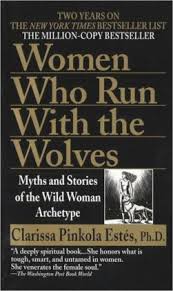
I am loving and savoring Women Who Run with the Wolves by Clarissa Pinkola Estés and am about to give away a free copy! It’s the perfect book for any woman who has been in creative hibernation and is ready to come out, claws unsheathed.

women who run with the wolves

I’m still reading it because it’s not the kind of book you tear through, at least not for me. I read a few pages at night, or when I can steal a moment during the day, and her powerful words invigorate, inspire, and more often than not, give me chills.

The funny thing is, I tried to read it in college and failed. It was too dense or perhaps I wasn’t ready for her wisdom. But last year my dear friend Anastasia, an artist and writer, suggested I try again, and her recommendation was so persuasive and spine tingling, I ordered it right away.

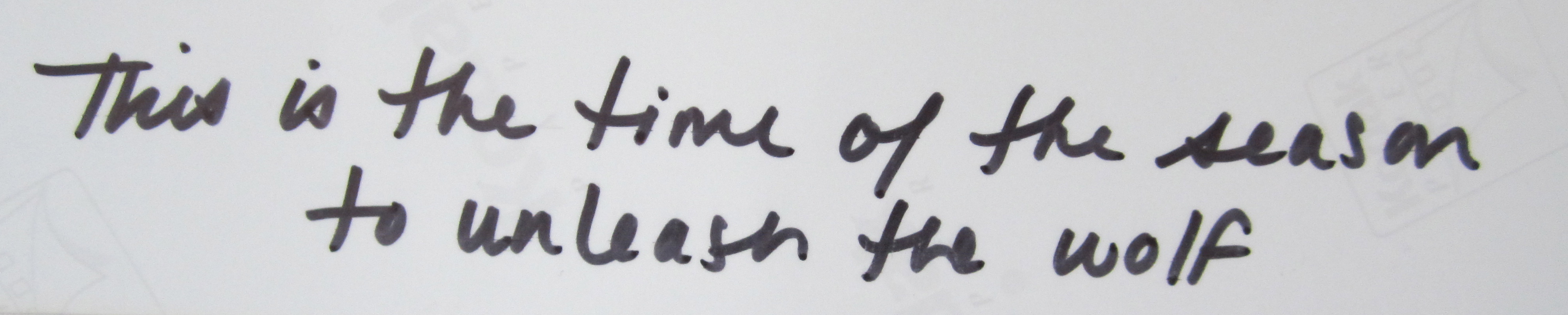
I’ve since recommended it my friend Janice, an artist and jewelry maker, who coincidentally couldn’t get through it in her 20s either. So far I think she’s enjoying it. On her family holiday card she added this line on the back, which I loved so much I put it on my cork board in my office:

time of the wolf

  1. Have you ever regretted having something published? Was it because of the content or the actual writing style/syntax? (Obviously we all grow as writers and looking back at our “clunkier” writing can be cringeworthy…that’s not what I’m talking about here. I mean are there things you wish you hadn’t said out loud either because of what you said or how you said it. I’m not in this position right now, but some things I’d like to write about might get me there. And yet…how can I ignore those topics, you know?)

I have. It was content, and at the time I thought I was being sensitive to the person I was writing about, but turns out, not so much.

Without going into too much detail, I wrote about a personal experience with my daughter that was traumatic for my family, which occurred at a friend’s home. Months later I found out she had been terribly hurt by the post. Sadly to say, even after a heartfelt apology we are no longer close. I’ve since deleted it and am now more conscientious when writing about people in my life.

I wrote my reflections about that experience here.

I think there was a better way to write about what happened, and my advice to people is to pause before hitting “publish” – especially if it’s very soon after a traumatic event. I’m not talking about censoring controversial topics or strong opinions, but being cautious when our words may hurt the people we love.

Thank you Kristen for igniting this amazing ongoing dialogue with your wise and wonderful questions. Here is my additional question:

How do you balance blogging with other kinds of writing, if you happen to do both? (Or if you write for more than one blog.) Do you allot time for each? Do you feel guilty, like I sometimes do, when I choose to write a blog post over working on my albatross, I mean novel? Have you ever taken a blogging hiatus to finish a different project? I’m super curious to know how other writers deal with this, since finding a balance is a struggle for me.

Interested in sharing your behind the scenes writerly habits? If so, feel free to post your answers in comments or on your own blog. I will definitely come by and read them. 

Here is the list of bloggers who have answered Kristen’s questions. Please take a look, I’ve really enjoyed reading everyone’s responses! 

Nina Badzin

Lindsey Mead (A Design So Vast)

Lara Anderson (Joy, Lovely Joy)

Justine Uhlenbrock (Heirloom Mothering)

Andrea Jarrell

Stacey Loscalzo

Tricia Mirchandani (Raising Humans)

Rivki Silver (Life in the Married Lane)

Zsofia McMullin (Hunglish Girl)

Rebecca Klempner

Sarah Brentyn (Lemon Shark)

Being Rudri

A.F. Marcom

Evelyn Lauer

Katie Sluiter (Sluiter Nation)

What I’m Writing

One of the reasons I started this blog was to find and foster community among my fellow mother-writers, and I’ve already found a lovely one in Maddy over at Writing Bubble. She invited me to join her weekly link up that she co-hosts with Chrissie over at Muddled Manuscript (oh, I love that name) called, “What I’m Writing,” which of course I can’t resist.

This week I’ve spent much of my (minimal) writing time polishing up the rusty bits of a blog post and formatting my very first newsletter (!) that I will be sending out shortly. I really enjoyed writing the newsletter, but felt a bit guilty that I wasn’t working on the novel.

Oh, the novel! It’s like my albatross, but a very special and beloved albatross that I tend to with absolute devotion despite its overwhelming weight and refusal to budge off my neck.

Photo Credit: ultomatt via Compfight cc They look so innocent flying in the air.

Photo Credit: ultomatt via Compfight cc
They look so innocent flying in the air.

But I will say, I’ve made progress on it this year. Last January I dusted off my woefully neglected albatross, I mean, manuscript – one that sat in a safe (literally, a safe!) for five years. I had finished it just two days before giving birth to my daughter…who is now six and a half. Do the math if you must. It’s not pretty.

Photo Credit: elseniorfox via Compfight cc Ok, it wasn't this old.

Photo Credit: elseniorfox via Comp fight cc
Ok, it wasn’t quite this old.

One day while my daughter was in kindergarten and my son with his sitter, I read the whole thing, from start to finish. I don’t know what I expected, certainly not perfection or genius (I’m not that deluded), but I also didn’t think it would be total garbage (though parts came close). When I finally put the pages down I felt a strange sense of relief. I knew what I had to do. Start again.

I salvaged what I could, about sixty pages, and then cut the rest of it. There is still a file on my computer with 200+ pages that should for all intents and purposes be deleted but I can’t bear to do so, yet. Since then I’ve written many, many more pages, some of which have made the cut while many more have not.

You have to be ruthless as a writer, but you also have to hold onto a certain naiveté or willful ignorance. Dani Shapiro says it well in her book, Still Writing:

“So how do we make peace with the knowledge that every word, every sentence we write may very well hit the cutting room floor? Well, we don’t make peace with this knowledge. We willfully disregard it.”

That’s what I’m doing as I work on my novel. Some days the task feels so monumental, so overwhelming, it’s like chipping away at a glacier with a toothpick.

Photo Credit: blue polaris via Compfight cc

Photo Credit: blue polaris via Compfight cc

But I keep on going, not knowing what will be saved or cut, not knowing if this latest draft will be good enough to merit an edit, and then, after that, if it will ever be read by eyes other than my own.

I’m writing in the dark, slow and steady like the tortoise because my kids are young and underfoot, and that’s how it has to be, for now.

But I sense with a kind of animal instinct, or maybe just a writerly one, that I’m approaching something with my novel. There is a quickening, a slight uptake in the beating of my heart. I feel as though I’m on a roller coaster, ratcheting up the tracks. Before all I could hear was the steady clacking sound, but now I can see something too, a glimmering in the distance. I am getting closer to the top. Closer than I have been. If I keep going I will finish. And that is my goal.

What are you working on? Are you chipping away a sliver at a time or are you making great gouges?

typewriter-butterflies-badge-small

5 Ways to Finish

Photo Credit: Vic de Vera via Compfight cc

Photo Credit: Vic de Vera via Compfight cc

That’s the goal, isn’t it? To finish, to sit back and say: Yes, this is DONE.

I’m not talking about finishing a draft of something (short story, novel, play, painting – you get the idea), although that absolutely IS its own awe-inspiring feat.

I mean finishing to completion, realizing you’ve done all you can to say, a manuscript. You’ve toiled and rewritten, edited and deleted, you’ve pounded your desk in triumph and cried into your coffee. You’ve cycled through euphoria and depression, you’ve persevered and come out the other side.

You’re ready to share your creation with others. Perhaps this means pursuing traditional publishing á la querying agents, or going DIY and self-publishing. But the point is, you’re ready. Your work is ready.

The goal could be to end up on a shelf. Photo Credit: isayx3 via Compfight cc

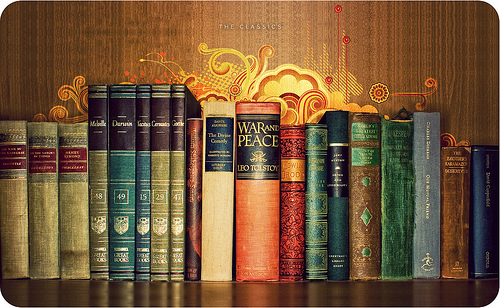
The goal is to end up on a shelf.
Photo Credit: isayx3 via Compfight cc

Some days this feat feels attainable, and other days (um, most days) it feels like trying to touch the moon.

The world is full of finishers. They’re all around me. From the author blogs I follow to the lovely women I write with on Wednesdays.

This is a good thing, an inspiring thing, but if I’m not careful, it can turn ugly – in my brain. That’s when doubt and fear try to wrestle me to the ground. Voices snake into my ears, tunnel into my heart. They say things like this:

How can you call yourself a writer?

You’ve been working on your novel for how many years?

Look around, everyone is ahead of you by miles, light years. You might as well quit now.

Photo Credit: HQheart via Compfight cc

Photo Credit: HQheart via Compfight cc

Once you start down this road, it snowballs fast. One of my favorite bloggers, Chuck Wendig, of terribleminds.com, describes the feeling in a post titled, “There’s This Thing That Happens Sometimes.” Here’s a snippet:

“You step onto this grease-slick slope, sliding down through the shadow of envy, doubt, uncertainty. You feel smaller and smaller as you fall farther and farther. You tumble face-first into the revelation of your own inadequacy, your grotesque and unconquerable imperfection, your worst failures… ”

His advice? Step away from the pit. As soon as you sense it, the second you smell it. Really, it’s all you can do.

Because if you don’t you might get stuck, and if you’re stuck you’re not writing, and if you’re not writing you won’t finish.

Thinking about the ever present quandary of pit falling versus goal finishing inspired me to come up with my own list of advice. While certainly not foolproof, this list has served me well thus far in my attempt at finishing my novel.

5 Ways to Finish

1. Be selective with your recreational reading.

Read books, blogs, and articles that inspire you, offer tangible advice, that buoy. Stay away from the sinkers. When I say “sinker” I mean what sinks you. There may be nothing inherently wrong with that person’s words, in fact, they may buoy someone else, but if it makes you question or second guess yourself, it’s best to step away from the book, blog, Twitter feed, or whatever. Just STOP. Use your reading time for sharpening your skills or boosting your confidence, or – hey, here’s a crazy thought – enjoying yourself.

For me, examples of this is devouring posts on Positive Writer (the name says it all) and Writer Unboxed. I’d love to hear what it is for you.

2. Zip it, lock it, put it in your pocket.

That’s a phrase my six-year-old daughter says, and I kind of love it. Besides saying it to both my kids on a regular basis, I say it to myself.

What does this have to do with finishing? Here’s what: Don’t talk about your work. Too much. Or at all.

Maybe I’m suspicious, but I find when I talk too much about the story or novel I’m working on, the magic fades. It’s like a balloon slowly leaking air, I don’t even realize it’s happening until it’s too late.

Photo Credit: Laizee via Compfight cc

Photo Credit: Laizee via Compfight cc

Sometimes it’s crucial to talk shop, especially when trying to untangle a knot, or brainstorm an important plot element, but for the most part, keep it to yourself. When you feel a rise in excitement and feel like you’re going to bubble over, instead of talking about it, write.

3. Set realistic goals.

I try to keep my expectations and goals reasonable – as in doable. Otherwise my self-esteem takes a nose dive when I inevitably fall short of say, a five-page-a-day kind of goal. Two pages a day? Much more doable (for me).

I’m not saying sell yourself short, but figure out a daily or weekly goal that works for your lifestyle and do everything in your power to stick to it. When life – inevitably – backs up into your writing time, brush yourself off and start again. It will be harder to get back on track. Dani Shapiro likens the spurned page to a jilted lover (see #5), but if your goals are on the reasonable side, it may be a faster recovery.

4. Indulge in some fantasy.

Um, I’m talking about visualization here. Don’t get any funny ideas.

For me, the ultimate fantasy is seeing my book on a bookstore shelf, or better yet, a display table. (Hey, I worked in a bookstore after college and spent much of my restocking time daydreaming about this.)

Photo Credit: Ruth and Dave via Compfight cc

Photo Credit: Ruth and Dave via Compfight cc

This kind of indulgence is a nice counterbalance to a writer’s usual modus operandi, which resembles a huge twitching ball of anxiety and self-doubt.

A little time spent fantasizing is fine, but beware of relying too heavily on these lovely interludes when you should be writing. FYI (to myself), nothing actually gets accomplished while you imagine yourself alone in a room surrounded by hundreds of boxes of your published novel.

5. Don’t Stop. No matter what.

Maybe you haven’t written in a few days, weeks, or months. Perhaps even years. It doesn’t matter. The thing about writing is that it’s always there waiting for you. I love this quote from Dani Shapiro’s Still Writing:

“Writing is hard. We resist, we procrastinate, we veer off course. But we have this tool, this ability to begin again.”

When we stray, the return can be tough. The longer we wait, the harder it is. Shapiro also acknowledges this, saying, “The return won’t be easy… The page turns from us like a wounded lover. We will have to win it over, coax it out of hiding.”

True enough. But on the upside? It’s always possible to begin again… and to finish.

…………………………………

Maybe you’re a finisher, or in the thick of it like me. Either way, I’d love to know if any of these tips resonate with you, or what you do to keep yourself on track.

Being a Mom is NOT Enough (For Me)

Writing those words is not easy. Feels a little taboo, like something a mom is never supposed to admit.

Then there’s the whole people pleaser part of me that doesn’t want to make anyone mad. But this idea has been sitting on the back burner of my mind for a while now, simmering like a pot of water. Steam is escaping out of the edges and the lid is rattling. Time to look inside.

Photo Credit: *floydgal* via Compfight cc

Photo Credit: *floydgal* via Compfight cc

I believe being a mom can be enough, and is enough for some women.

Let me go deeper – I believe that being a mom is enough for some women at certain times of their children’s lives. Like for me, when my kids were infants, all I could do was nurture them and try to get enough sleep in between night wakings to stay alive. Writing was not on my priority list back then. Things like showers and sleep were.

During my daughter's newborn stage.

During my daughter’s newborn stage. A mommy nap.

But as the years rolled by there came a point when I realized I needed something else, something that belonged just to me.

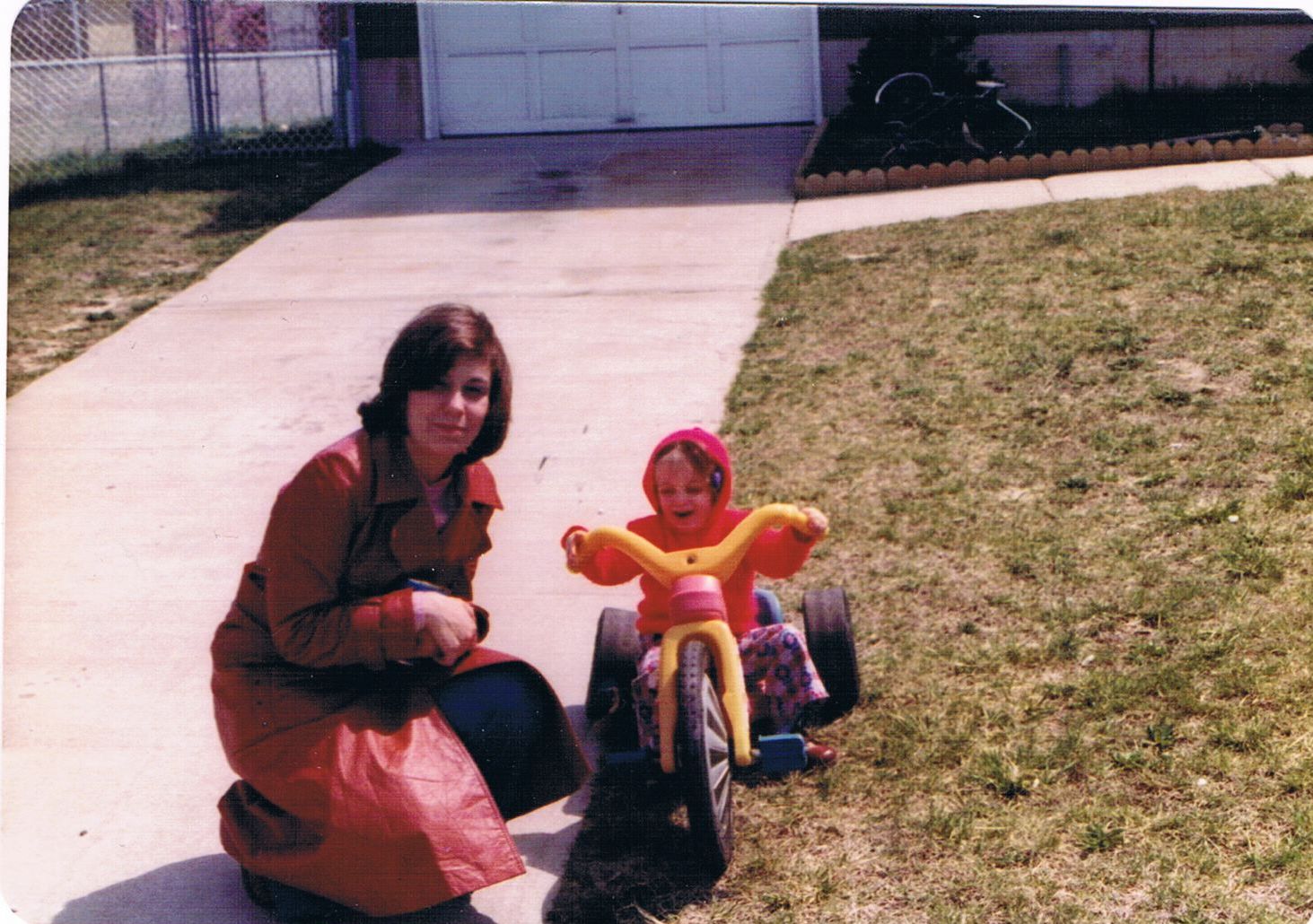
I wonder about my own mother. Was being a mom enough for her? Unfortunately, we never had a chance to be moms at the same time and explore these types of questions. She died a year before my daughter was born.

Me and my mom, May 1977

Me and my mom, May 1977

She was a stay at home mom by choice, and I know that was important to her, in part because her own mother worked long hours after her husband died young. My mom never wanted us to experience the loneliness she felt as a child, and so even when she worked part-time or volunteered, she was always there to greet us after school.

This clearly influenced me. I wanted to offer my children what she did, and I have, while also trying to pursue my writing. My mom was an artist too, a talented sculptor whose beautiful and haunting creations outlived her.

susan schwartz masks

Unfortunately for her – and for our whole family – she was diagnosed with a severe form of multiple sclerosis when she was just forty years old, a disease that cruelly took away her mobility, one limb at a time, in rapid succession. Her deft fingers that sculpted vases and bowls, that painstakingly etched emotion into clay faces, were rendered useless. Her art endures though, as does her signature. And her love.

mom signature green

I’m soon to approach that milestone birthday, and I wonder if I’m holding onto a kernel of fear that something may befall me and derail my creative ambitions, like what happened to her. Perhaps that is what pushes me to write now with more urgency than before.

Or perhaps I’m finally ready to write with fervor.

I am fortunate that I have two healthy children, and the luxury of choice to stay home with them. I am grateful to my partner for supporting our family financially, for my health, and my ability to pursue my dreams.

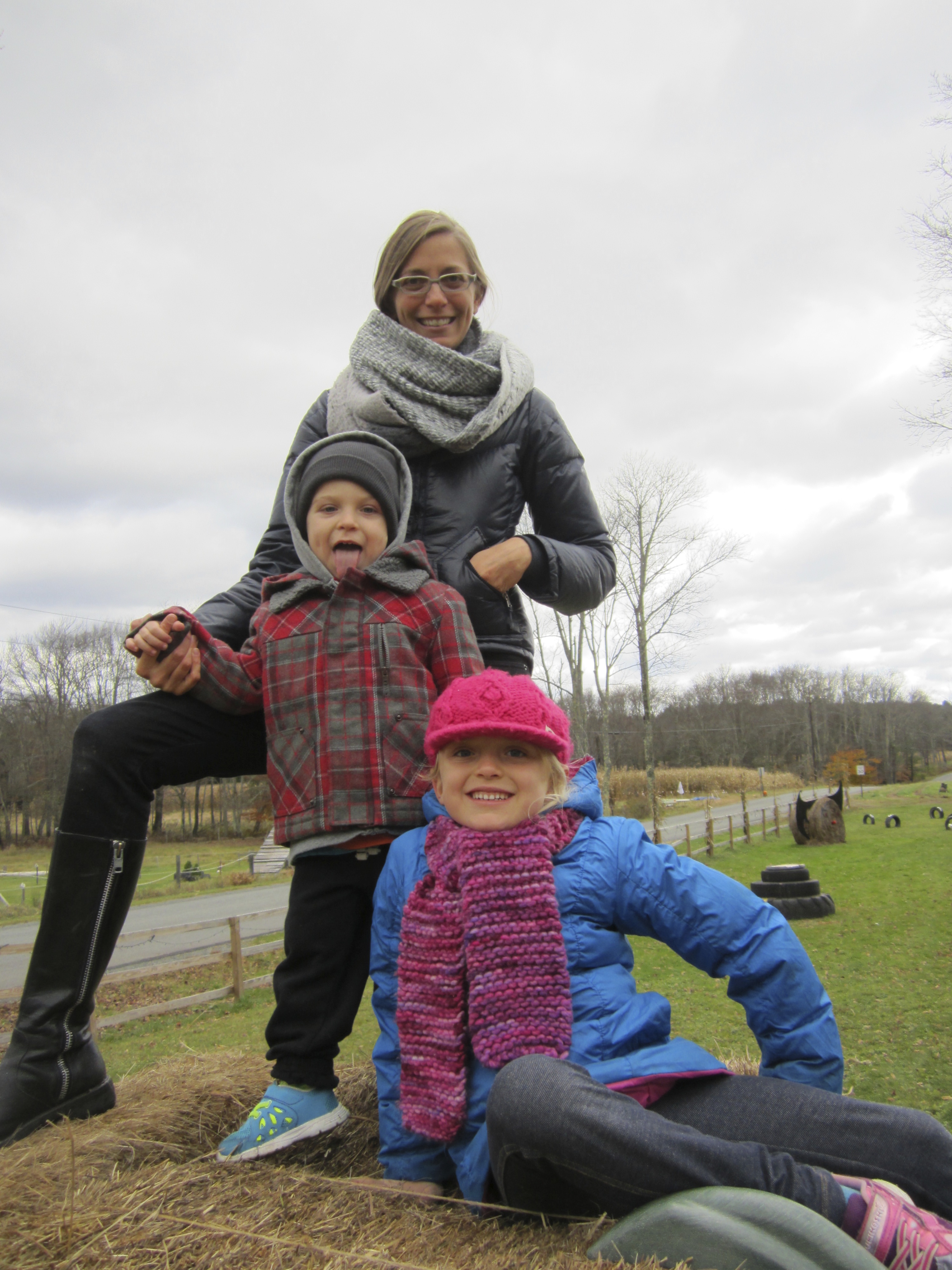
me and kids winter 2014

I want to be their mother AND a writer.

And so, that’s what I’m finally trying to do.

today i will make magic happen

Welcome to…

Writing at the Table, a blog about the often foolhardy but life-affirming tasks of being a writer and mother.

Or is it mother and writer? Writing mother? Mothering writer?

For a while I tried to compartmentalize these elements of myself, draw lines in the sand, but the truth is, when it comes to having a family and being a writer, and perhaps more pointedly, being a mother and writer, there are no distinct lines (although there is, on occasion, a lot of sand).

Playwright, poet, essayist, and mother of three Sarah Ruhl sums it up efficiently and elegantly:

“I found that life intruding on writing was, in fact, life. And that, tempting as it may be for a writer who is also a parent, one must not think of life as an intrusion. At the end of the day, writing has very little to do with writing, and much to do with life.”

– from 100 Essays I Don’t Have Time to Write

Reading while living.

Reading while living.

For three and a half years I’ve blogged over at celiac kiddo, but now I’ll be posting here regularly! For more info about this blog, and the mom who’s writing it, check out my about page.