Soaring into the Unknown

“If we can find the courage to face the unknown, we can ‘mind’ our futures more gently. We can examine new ideas, go places we never expected to go…”

– Allison Carmen, Psychology Today

soar

Facing the unknown has never been my thing.

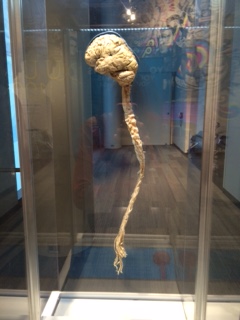
I like having an idea of what’s going to happen next, or knowing what the next step should be. The less surprises the better. Clearly, I’m no thrill seeker. At The Franklin Institute over the weekend we finally made our way into the Brain exhibit. I don’t know why we never ventured in there before. It’s fascinating, and we barely touched the surface.
brain

One thing that struck me was a section about why some people are more thrill seeking than others. Basically, it’s less about choice and preference, and more about the brain and how much of a “reward” we get from risky activities (i.e. dopamine). Looks like my dopamine surges must be minimal, because I’ve always sought the comforts of safety over danger.

The last few months I’ve been struggling over the fate of my novel-in-progress. Maybe struggling isn’t the right word, or I was struggling, and then after Florida I decided to surrender. Since then I’ve been letting my intuition lead, following the faded footsteps in the sand, picking up glittering rocks and shells that catch my eye.

I signed up for a local 4-week memoir class and dove into my own crash course on creative nonfiction, reading craft books and memoirs as I contemplated writing my own.

I let myself consider the “maybe” of trying something new. Of not knowing. Of taking a chance.

Then the other day I was scrolling through the bottomless pit of FB when I came across an article whose title made the back of my neck prickle with recognition. “Why Are We Always Looking for Certainty in Our Lives?”

Whoa. I read it and double whoa. The author honed in on my lifelong tendency to play it safe and assume a sense of control. Then I read this:

“But often we are ignoring new opportunities, stifling creativity and true desires for the sake of certainty.”

Oh, crap.

Fiction has been my comfort zone for my entire writing life; not just the writing of it, but the reading, too. I remember feeling vaguely annoyed that I had to spend one module on another genre during my MFA. I picked creative nonfiction not out of a genuine interest, but a lesser of evils, too terrified about the vulnerability of poetry to consider it.

Over the course of the module, something shifted within me as I realized that fiction and creative nonfiction weren’t as far apart as I had imagined. The piece I wrote for my (incredibly awesome) professor, Thomas E. Kennedy, was called House on the Hill, all about my childhood home and how our high perch offered protection and isolation. He gently but firmly encouraged me to further explore the bruises of memory, some old, others still fresh.
roots

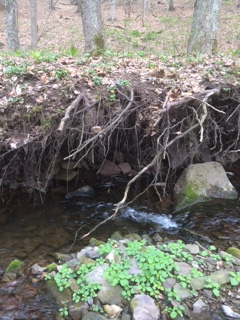
All those exposed roots.

I’ve been thinking of the phrase, house on the hill, over these past weeks, maybe longer, as I contemplate digging more deeply into my past and present. Reflecting on my mother, and my own mothering. The choices I make about my life and art, the choices my mother’s body made for her. The house I grew up in looms large in my mind like a patient ghost, always lingering, waiting for me to return.

And now, finally, I’m ready to go back and see what it wants to tell me.

What side of the spectrum do you lean, toward adventure and risk, or comfort and safety? Do you shy away from the unknown or leap toward it?

I’m so pleased to be part of Writing Bubble’s wonderful link-up. Come by, take a look, and perhaps join in!

What-Im-Writing-linky-badge


Living in Limbo

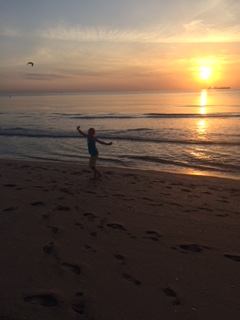
I’m reminded of why I love the ocean each time I return.

sunrise

We recently spent a week in Florida. With three days of travel, it wasn’t quite enough time to settle in, to get comfortable, feel at home. But then again, you’re not supposed to feel at home on vacation, are you?

This trip was a whirlwind, and hard in many ways. We went to Disney World first and then spent a few days in Ft. Lauderdale to unwind. But unwinding with kids is kind of an oxymoron. Or maybe just moronic?

Don’t get me wrong, there were highs as well as lows. Vacation is just another piece of life. Your worries and stressors don’t disappear once you step foot on a plane. If you’re like me, they multiply.

On the way to Ft. Lauderdale our brains sizzled in the sunny, claustrophobic car. My husband and I bickered, the kids fought. At one point in the drive I went silent.

By the time we arrived in Ft. Lauderdale I had calcified.

Even the beauty of the ocean couldn’t melt me, and neither did the chic and crowded hotel we were staying at. I felt like an alien around so many smiling and scantily clad people. I wanted to go home.

But we made it to our room, dropped our bags, and then hurried to the beach as the sun began to drop in the sky.

Once there the kids immediately dove into the still warm sand and splashed their feet in the turquoise waters. I stood with my arms wrapped across my chest, but there was a loosening. My husband called a truce. He hugged me and my anger began to uncoil as the ocean lapped onto my feet.

The next day we went back, despite the spotty weather, the ominous sky.

Together we forged into the beautiful sea glass blue ocean. I held onto my young son’s hand while my daughter splashed at my side. I get the sense that the current wants my children as much as I do, maybe more.

My daughter doesn’t need my hand, however, she can swim like a fish. Diving down to the clear shallow bottom and coming up with beautiful shells. She knows to be cautious about the ocean. I’ve taught her that much. But she’s not overly fearful. She leaves her anxiety behind as she dips and dives beneath the waves with a confidence I hope to one day see on land.

bunky on beach

When my husband took her out to deeper waters, I sat on the shore with my son. We played his favorite game. Build and destroy. First I buried him up to his waist with wet shell studded sand, and then he broke through, cracking like an egg, delight lighting up his face.

Then, castles. I built ten, twenty, small structures so he could crush them with his still chubby four-year-old feet.

I sensed a young couple nearby watching us. They smiled kindly at me when I glanced over. I had a moment of self-consciousness, as if I were posing in an advertisement for blissful parenthood. I had to suppress an urge to run over to them and tell the truth. It’s not always like this. You should’ve seen me yesterday. But of course I refrained. The secrets of parenthood have to be discovered firsthand, if at all.

The beach is my touchstone. Every time I sit in the sand and it sticks to every part of my body, I always feel the urge to brush it all away before remembering to surrender. To the mess of it, to any semblance of control. But surrender has never been easy for me. I struggle to find order in chaos. It’s hard for me to sit in discomfort.

Right now I’m at a crossroads with my writing. A kind of limbo. I have to decide whether to continue with my novel, which needs to be rewritten (again), or embark on the entirely unchartered course of memoir.

The question ping-pongs in my head relentlessly. I’m worried about making the wrong choice. About wasting (more) time writing something that will never reach eyes other than my own.

There is no “right” answer. I know this, and yet I posed the question on Facebook. The wise and supportive responses filled me with gratitude, but ultimately the decision is still mine to make.

So I remain here, for now, in limbo.

A place I’m quite vocal about not liking. But maybe my struggle against limbo is more futile than I thought – because what if life IS limbo – the place we all reside between birth and death? If so, then all we can do is surrender to what may come next. To feel our way, as best we can, through each day.

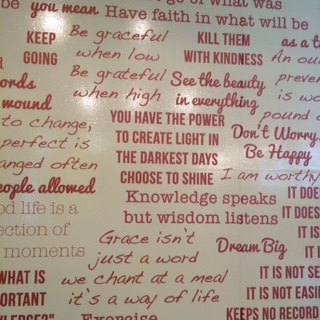
wall quote

If I surrender to uncertainty, in my writing, and in my life, I will move forward. If I surrender to the mess, like I did in the sand with my son, I don’t feel so worried about wasting time, I can smash down the castles I worked so hard to make, knowing I will rebuild. I can create something new on the base of all those broken, necessary, pieces.

Are you in limbo right now? Hovering between conflicting choices? How do you find your answers? 


Grief 3 Ways

As you may have noticed, there is a running theme here lately, about grief.

I didn’t intend to write so much about it, but that’s the thing about writing – you don’t always choose your subjects. Sometimes, they choose you.

When my mom died, she was all I could think about, write about, but I kept it mostly private. This was almost nine years ago, when the blogging and online world was quite different. I wrote – as I’ve always done – to understand. It was more instinct than decision. Now, the journals I filled have become a reference for the work I’m doing now.

I’m almost done writing the content of my grief course which I’ll be facilitating on the site, The Gift of Writing, and it’s been quite a journey. Despite all the time that has passed, I’ve learned things about my mom and myself I didn’t know before. That is one of the hopes I have for the people who join my class. You don’t have to be a writer to sign up, you just have to be willing to write.

If you’re interested in receiving updates about the class, click here to add your name to the wait list and you’ll be notified when registration opens.

In the meantime…

grief 3 ways

I recently wrote a guest post on The Gift of Writing called, Every Grief Counts: How to Honor Your Grieving Experience. I feel strongly about the importance of this post because I think there can be a sense of competitiveness and comparison when it comes to grief.

Sometimes I have to remind myself that grief is extremely personal. But the questions still rise up. How long is it appropriate to grieve? Are some losses “worse” than others? Please take a look at the article if you haven’t seen it already, or pass it along to anyone you think may be interested.

I also wrote an essay about my mother and her caregiver, Lucie, and the different ways both women showed me their love. You can read that here, on the lovely site, Mothers Always Write.

Last, but not remotely least, I am so proud of my friend Anastasia for the second book in her Ordinary Terrible Things series, Death is Stupid, published by Feminist Press.

death is stupid

Using her gift of collage and her deep well of empathy, she has created a wholly original book about death – including all the nonsense (well meaning and otherwise) that people say to children when someone they love dies. I urge you to watch the book trailer, which will give you a glimpse at the magic she makes with words and art.

Just to assure you, despite all my grief-making work, I am not at all depressed. It’s spring, one of my favorite seasons, and I’ve seen enough daffodils and forsythia to prove it. Sure, the chilling temperatures are a bit of a downer (and I’m very sorry to my upstate and New England friends for SNOW, not cool), but sometimes I think we forget the capricious, fickle, and teasing nature of April.

It’s still early spring, nestled up against the cold cusp of winter, and maybe clinging to the old season a little more tightly than usual. I imagine a dozing bear, annoyed at being roused, and yearning for just a little more sleep before it lumbers out into the sunshine.

Here’s hoping it lumbers out sooner than later.


We Share Our Losses

My grandmother wasn’t a happy woman, not when I knew her, so this picture I came across the other day is especially striking.

Pauline and Harry

The joy and openness in her eyes, the width of her smile, radiates joy. Beside her is my grandfather, a man I never met, who died when my mom was eight years old. A man who never felt like he belonged to me, in any way.

His ending was a cautionary tale of a congested heart. Three strikes and you’re out. That’s how many heart attacks it took to kill him. A young man, in his mid-forties, he left behind the love of his life and two bereft children. My grandmother never recovered from his death. It left her shattered and bitter, furious at her bad luck. The life she had imagined turned into dust.

I don’t know how my mother recovered. She had been a daddy’s girl.

When I was a kid my mom rarely spoke about her father, though I’m sure she must have explained to us what happened at some point. I remember how she used to light a yahrzeit candle a few weeks before her birthday on the day of his death. Quietly it would sit on the white countertop and burn without ceremony. For the rest of the year it resided in the rarely used kitchen cabinet filled with dusty wine glasses and an assortment of solitary cups and mugs that had lost their companions.

Looking back, I wish I asked more questions, I wish my mom had been able to share her grief with me. But as a cousin reminded me recently, grief wasn’t discussed openly back then. Maybe my mom thought she was protecting us by keeping it to herself, or maybe her memories were too distant to access, but the space it left, in the shape of a father and grandfather, loomed large in my imagination.

My childhood friend Tamra, who I’ve known since third grade, saw the photo when I posted it on Facebook and made a comment that caught me completely off guard.

She wrote, I see the resemblance with you and your mom. I automatically assumed she meant a resemblance to my grandmother, but when I read the rest of her comment, I realized she had been referring to my grandfather. I stared hard at his jovial good-natured face, searching for familiarity: I saw shadows of my mother easily, and then, I almost saw myself.

I stared at him, this man I had never met, barely knew anything about. Despite all that he was mine. He did belong to me. For a brief moment I allowed myself to imagine what life might have been like if he had lived. A grandmother and grandfather coming to visit, living close enough for me to spend the day, the night, to curl up in his big arms and be read to, held, and loved. My grandmother might have smiled more, and maybe, just maybe she would have been a better mother.

Up until this point I had never allowed myself to stake a claim on this man, to miss him, or mourn his absence. To imagine what he might have meant to me. I felt like that would have been selfish. This was my mother’s loss, not mine. But I was wrong. It was both of our losses. Just like her death is not just my loss, but my daughter’s, and my son’s.

It seems so obvious to me now. We don’t have to hide or hoard grief, we don’t have to pretend it’s not ours to mourn. Like love, there is enough to go around.

The spring before my mother died, when she was weak and recovering from a long winter illness, but before we knew she was dying, my uncle came to visit. Her older brother. When his father died, he became “the man” of the house, too heavy a burden for a twelve-year-old to bear. Nevertheless, he bore it out of necessity, and out of love for his little sister, but it left a bitter trace on him, a shadow of his mother’s twisted anger.

We talked about the past that day, which was unusual. Maybe it was me. Maybe I asked about my grandfather, maybe I offered what I had been unable to offer all those years earlier. An acknowledgment of their deep loss. My empathy.

I listened with rapt attention as my uncle recalled that fateful day of the final heart attack. Their father taken away, and then later, the news traveling back to them, my mother running to her room in tears.

“She couldn’t stop crying,” he said, looking awestruck so many years later.

Those four words hit me hard. I looked over at my mother. Her big brown eyes were wide with sadness and memory as she gazed at her brother. In a flash I saw the two of them as children, trying to care for each other.

Before he left that day, my uncle said goodbye in his usual brusque but loving manner. A quick hug for me and a wave to my mom across the room. She said goodbye from her reclining chair where she had sat for nearly a decade since she lost the use of her hands and legs to multiple sclerosis.

“Go and hug her,” I told my uncle in a low voice. He looked at me surprised. This was not his usual way. I don’t know for sure, but I think her handicap made him uncomfortable. Maybe it was too hard for him to look at her in that chair. But that day I didn’t give him a choice. I took his arm and pulled him into the room.

He leaned over her chair and hugged her, maybe for the first time in years, and I heard him say in a voice so tender, “I love you Susii,” her girlhood name. The name her father must have called her. The name my father called her until she became my mother and decided she was no longer a girl, and to please call her Susan.

The next time he saw his sister, she was under hospice care, unconscious, and close to death.

When I got pregnant, shortly after my mom died, I knew right away there was one thing I’d do differently. My children would know their grandmother. I would tell them her name, show them pictures, and talk about her life, her art, and one day, her death.

There are two of them now, grandchildren. A girl and a boy, in the same order my mother had me and my brother. A strange kind of twinning, but not.

They do not wonder about the blank space as I once did because it’s always being filled.  My hope is that she is as vibrant and beautiful in their imagination as she was in life.

mom and Harry

My mom and her dad, my grandpa Harry

Rest in peace, Harry Cooperman, grandpa. I know I would have loved you.

Grieving While Pregnant

A few weeks ago on Facebook, one of my favorite sites, What’s Your Grief, asked readers to offer advice or pose questions about how to parent while grieving. This immediately caught my attention. Parenting while grieving is the only way I know since my mom died shortly before I became pregnant with my first child.

Pregnant with Emma Feb2008 copy

February 2008 pregnant with my daughter, my mom’s portrait beside me

On a whim, I decided to pitch the site an idea about grieving while pregnant, my other unfortunate expertise. To my surprise and pleasure, my pitch was accepted. I immediately started taking notes. I couldn’t write fast enough. Clearly, this idea had been brewing in my subconscious for, well, years.

If you haven’t seen it already, I would be so honored if you’d stop by and take a look, or perhaps send the essay to someone who might be able to relate. Click on the link below to head over to the site.

Making Time For Grief During Pregnancy

Thank you again!

Making it Count

This is the hardest part. Getting there. The sitting down to write. The writing.

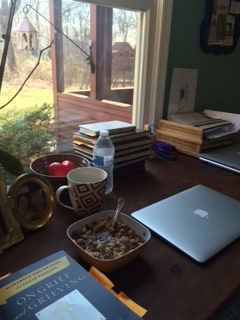
desk at workAfter the morning rush – making breakfasts, lunches, fixing hair snafus, finding socks, waking up a rumpled, warm late-sleeping little boy from my bed, and then hurrying out the door for school drop-offs, first the big kid, then the little.

Throughout it all, there is buzzing in the back of my head, a warm recognition of what day it is, that soon, this morning will belong to me. Soon the house will be quiet and I will be alone, except for the cat nudging the computer with her chin, and the birds frequenting the feeder outside my office window.

But first, the logistics of mothering two children. Sometimes there is a struggle, a scuffle or two. Often there are tears, from the little, at our parting. Arms wrapped octopus style around my neck, fingers that are sometimes pried off, one by one.

Me walking to my car in a sad defeated haze, thinking, is this worth it? Am I doing everything wrong? And yet, I know that I’m not. I know that I need these mornings alone as much as my little needs school. On those days especially, I know I must make my alone time count. Every minute.

I didn’t always. There were the hibernation years of early motherhood when I wasn’t writing. My daughter, newly diagnosed with celiac, was often hungry for sweets she was unable to eat, so I’d bake gluten free treats during naps, then fold laundry or do dishes. I’d keep my hands busy, but my mind was restless, itchy.

Things are different now. There is much less baking and even less folded laundry (if that’s even possible).

I’m not winning any housework awards and I must admit to feeling a stubborn knot of pride about this. My kids have clothes that are clean, even if they have to pick through a pile to find them sometimes. They eat off dishes that have been washed. But mundane chores are not a priority. Not ever, to be perfectly honest, but especially not during my writing time.

I protect it, as fiercely as I protect them. Because if I don’t, there is a price to pay. My rising irritation and frustration. Unhappiness. Snappishness. Writing releases something for me, it helps me to both understand and escape myself.

After ushering the kids off to school and returning home, it’s time to begin. I walk briskly by the detritus of the morning rush. There’s pretty much zero chance I’ll stop to fold the laundry, though I may kick a pair of underwear out of my path. The real concern is the internet.

It beckons me with its side roads and back routes, under the guise of research, a promise of just five minutes, the happy ping of outside validation. If I step in, I’m sunk. I might lose an hour, or worse, my confidence.

On the way to my office I grab everything I need because I won’t get up again until my time runs out. Not to reheat my coffee, which I only drink hot, or to retrieve a forgotten water bottle. My computer, breakfast, books, and journals must be at the ready.

I sit down, turn on the computer, and open the blank page. I’ve arrived at the leaping off point. The almost-there place. It could all go wrong with one simple click. Most days I hold steady, keep focused.

Then I begin. The words come or they don’t. But I remain at my desk for three hours, taking breaks only to sip my coffee, flip through a book, or gaze at the birds. I feel grateful for my time, even though it’s short.

In a little over a year, when the little guy starts kindergarten, there will be entire days stretched out in front of me like taffy. I hope the practice I do now will help me take advantage of those luxurious hours. Until then, I am a madwoman, making every minute count.

Do you have solo time to unspool your creativity? How do you keep it safe? Do you?

What’s in a Name

Last week, somehow, all my morning stars aligned.

While my son slept (in my bed) and my daughter snuggled in her bed (watching a show on my phone), I went downstairs and fixed myself a cup of coffee before settling down in front of the computer.

I was lucky, because minutes before my daughter hijacked my phone I saw the weekly prompt from The Inky Path and was immediately intrigued by the title: Your Name.

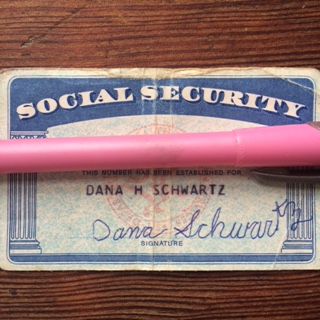
social security name

No one was asking me for breakfast – yet. I didn’t have to make lunches – yet. Birds floated gracefully around the feeder outside my office window while I wrote for ten blessed uninterrupted minutes.

Below is the inkling of the prompt (pun intended) and my response. I highly recommend heading over to The Inky Path and signing up for their FREE weekly newsletter and prompt. (They also have fabulous writing classes with reasonable fees. I’m not being compensated for saying such things, I just happen to believe them.)

Tell us about the name, or rather, your name. What is the story of your name? What is your relationship with the name that was given to you at birth? Do you use it as it is or in a shortened version? How has your name affected your life? Who would you have been with a different name? If you had the chance to choose your own name, what would it be?

I was never a big fan of my name. Dana Schwartz. It’s not as bad as my first (and last) Cabbage Patch Doll, Phyllis Hortensia (!), but it just didn’t mean anything. Well, that’s not true. Technically, Dana means from Denmark. But I’m not Danish.

I went through periods as a kid where I wanted to change my name. When I wished my parents had named me something else. Hailey was one of their choices. So was Robin. That was a close call. My father was concerned because he thought I looked a little like a bird when I was born. This was kind of true. He didn’t want anyone to make fun of me. My mom mentioned the name Summer once, and oh, I would’ve loved that. I was born in summer and I adore summer, so it would have fit.

How would my life be different if I were Summer Schwartz? It sounds kind of funny, but then most things do paired with Schwartz.

That’s another non-story. Schwartz was not my great grandfather’s last name. It was given to his family upon arrival at Ellis Island. Their name was Polanska. Too Polish? Too hard to pronounce? They gave them a new name, Schwartz, which means black in German, and that was that. An empty name. A placeholder.

A placeholder for what? A husband? I always considered, despite my feminist leanings, changing my name when I got married. But then I met a lovely man named Steven Plac. His last name is actually pronounced “Platz” in Poland, but here in America, they say, “Plack.” A name reminiscent of tooth decay. Sigh. What a waste.

Despite my husband’s wishes, I chose not to become Dana Plac. But it wasn’t just the sound of the name that made me hesitate, there was another reason I held onto Schwartz. It was my name. It belonged to me. Even though it had no bearing on my cultural background, even though I never liked how it sounded, garbled in the mouth, it was mine. I held it since I was born and giving it up felt like losing something.

Oh, but what about Summer? That sounds like a carefree girl. Someone who is not so uptight or worried or anxious. The kind of name of a girl who takes off her top at parties maybe, after too many drinks? The kind of hippie girl who dances around half naked around bonfires on the beach? Sorry, Summer, maybe you’re not like that. But there are worse things to be than carefree. Maybe it would’ve been nice not to be so damn self-conscious and concerned about what others think. Summer might not have cared. She might have danced right beside the fire and felt the warmth.

I don’t know who I would’ve been if my mom named me Summer. It comes down to mothers, somehow. I think my mother was the one to have the final say. It should be that way. We women do carry the babies. We know them before they emerge, we know about their secret selves.

As a child I held onto the idea that I could change my name. Maybe I could become Summer after all. I told my mother, when I’m 18, I’ll do it. But 18 came and went, oh boy, did it go, and here I am, forty years old, still holding onto my name, Dana. Two syllables, like Summer, but more solid, tethered to the ground, hearty, like a plant that digs in, takes root, and tilts its head toward the sun, feeling the warmth that way.

What do you think of your name? Did you ever consider changing it? I’d love to hear your story in comments.

Old Wounds

A few weeks ago, I dug out the stack of journals I wrote when my mom died. I filled almost 6 books from the end of June to the end of April. Ten months of grieving, nine months of carrying my baby. Two more journals written sporadically after the birth. New moms have limited time, as you can imagine.

journals

Opening old wounds is like peeling off a scab and watching the blood rise in tiny glossy beads. It stings, but also feels strangely satisfying.

Rereading these journals brings me right back to those early days. After only a few words, the tears that have seemingly dried up, or gone into hibernation, pour out. I welcome them, as painful as it is, because grief connects me to my mother.

It maintains and strengthens our tenuous connection, the invisible string that binds us together, from womb to body, from life to death.

I’m reading these old journals not simply for connection, but for research. As some of you know, I’m creating an online grief course for my friend Claire De Boer’s site, The Gift of Writing. The course, (tentatively) called Crossing the River, is about writing through grief. Not as a means to an end, but as a way to connect and integrate (healthy) grief into life.

This course isn’t just for those who are mourning a death. You can grieve the end of a relationship, whether it’s a break-up, divorce, estrangement, or abandonment. You can grieve infertility, the loss of a lifestyle, or a dream. In a podcast with Rob Bell, author and grief expert, David Kessler explains that grief is about change. Death is a big one, of course, but grief is how we deal and process any major change in our lives.

While writing this course, my grief has returned to me in fresh waves, but instead of rawness and confusion, it’s a release. The tears come and go and so do I. Moving forward in my life, grief is my shadow. Not a dark or scary one, but a companion that I find comfort in knowing is always there.

What are you grieving, right now?

I’ll keep you updated on the course, but if you have any questions or would like to be notified when it goes live, send me a note in comments or here: writingatthetable@gmail.com

When The Story Finds You

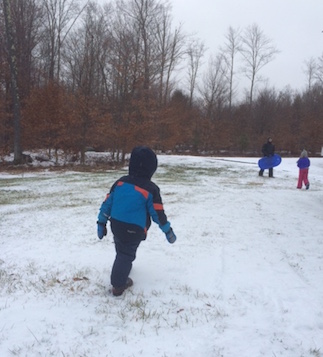
We spent our winter holiday in upstate New York on the edge of the Catskills. To our delight, despite initially mild temperatures, it snowed. Not much, but enough to coat the ground and frost the trees, enough for the smallest snowman and sledding.

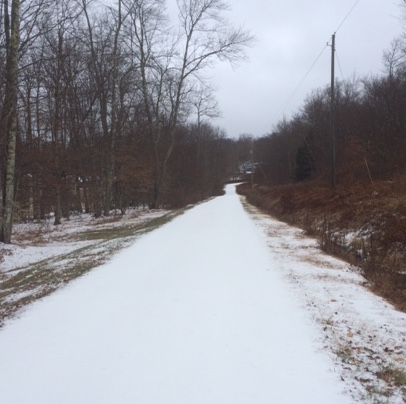
snowy play 2At one point, I decided to take a walk. I grabbed a wooden walking stick and headed up the empty gravel road. Away from the shrieks of my children, there was little noise. Just the satisfying crunch of the stick as it punched holes in the snow and the sound of my breath.

I’d forgotten how much I love walking, how fast thoughts rise up, like cream to the surface. After nearly a week indoors with my children – no snow to distract them, but thankfully, cable TV – I was finally alone.

snowy roadMy mind soon landed on a short story I’d been mulling over. A story about a family on the cusp of big change. A story that takes place in the Catskills. A story that happened to me. Since the specifics are hazy, and frankly too boring, I always knew it would be fictional.

With each step the story unwound like yarn in my mind, getting tangled up, unraveling, leading the way. I decided to write it in four sections, in the voice of each family member: mother, father, and their two daughters. I didn’t know yet the mother would be easiest to write, the older daughter the hardest.

I paused by a circle of pine trees and hesitated for a moment before heading into the brambles to explore. It wasn’t far off the road, there was no chance to get lost or hurt, but I hesitated. It’s how I’ve lived much of my life. Cautious, staying on the path, but lately, especially with writing, I’m taking more chances.

Back on the road, I stared at the smooth expanse of white snow. Without thinking, I began to write my mother’s name, as I used to do in sand at the beach, but instead of Mom, I wrote her name, Susan. Then I added these words: You Are Missed.

My mother, and the weight of her absence, is often just a whisper away.

Back in the warmth of the house, after hot chocolate and bedtime madness, I curled up in the chair between the rooms of my children and began my story.

It took me two weeks to complete, right in time for a mid-January contest deadline, which lit my initial fire. The story isn’t finished. I’ll tweak and sculpt more before sending it out to other contests, but the hardest work is done.

I don’t think I’ve ever written a story so quickly, but the truth is, it took longer than two weeks. I’ve had this story growing inside me for months, maybe years. The weekend I spent in the Catskills at age fifteen was the last vacation I ever took with my family. In fifteen more years, she’d be dead.

When you’re a writer, people love to tell you their stories. Oh, have I got a story for you, they say, perhaps expecting you to whip out a pen and take notes. It’s not their fault. Often their stories are fascinating, and could certainly make wonderful fiction or memoir. But in my experience, a writer doesn’t necessarily choose her stories – the stories choose her.

What themes do you return to over and over again? Is there a seed of a story growing inside you? Is it ready to bloom?

I’m so pleased to be part of Writing Bubble’s wonderful link-up. Come by, take a look, and perhaps join in!

What-Im-Writing-linky-badge


Out in the World

“Motherhood is an endless cycle of letting go, a constant reconfiguring of rules and boundaries. You have to be flexible, quick to shift and shed. These are things I struggle with in regular life, and as a mother, even more.”

One of my recent posts, Grief and Gray Days, is now up on Mamalode! I’m so thrilled to be on their site, which is filled with thoughtful and lyrical musings about motherhood.

If you haven’t read the essay yet, please head over to check it out. I love that it’s getting a second life.

white sky day

Thank you as always!